Saturday, April 14, 2012
God does not need you.
"God involves us in His mission because he loves us, not because he needs us."
- David Platt
The whole thing is really good. This quote came at ~18 minutes in.
http://t4g.org/media/2012/04/divine-sovereignty-the-fuel-of-death-defying-missions-2/

Friday, April 13, 2012
T4G: 2012

Wow! The speeches from this year's T4G are on-line! Check them out!
http://thegospelcoalition.org/blogs/tgc/2012/04/13/tgc-at-t4g-the-together-for-the-gospel-sermons/
http://t4g.org/t4g-year/2012/?sessions=main

D.A. Carson on a Christian Home

"I have quite often thought that the worst type of home to grow up in is the one with high spiritual pretensions but low spiritual performance, while the best type is the one with low spiritual pretensions and high spiritual performance."
- Dr. D.A. Carson
http://video.google.com/videoplay?docid=-417635934823717949
About 5.5 minutes into the interview.
The Gospel Project for Kids
If you are looking for creative, fun-filled, and family-focused approaches to children’s discipleship curriculum, there are plenty of options available. But we’ve heard from a number of children’s pastors who are dissatisfied with what they’ve seen. Though they appreciate these offerings for their creativity and the way they connect to parents seeking to disciple their children, these leaders are concerned that the primary message we are giving our children is simply that they need to “be good.”
What sometimes gets lost in the journey through Bible stories is the good news of what Christ has done to save the lost. In other words, in focusing on behavior, we may be missing the heart-change brought about by the gospel. Even worse, we condition our kids to think that the Bible is all about them.
It’s important that we take care not to give our children commands without showing them how the Holy Spirit, through the gospel, gives them the strength to obey these commands.
C.S. Lewis Advice to Kids

In a letter to a girl named Sarah, dated April 3, 1949, Lewis writes:
Remember that there are only three kinds of things anyone need ever do.
(1) Things we ought to do
(2) Things we've got to do
(3) Things we like doing.
I say this because some people seem to spend so much of their time doing things for none of the three reasons, things like reading books they don't like because other people read them. Things you ought to do are things like doing one's school work or being nice to people. Things one has got to do are things like dressing and undressing, or household shopping. Things one likes doing --- but of course I don't know what you like. Perhaps you'll write and tell me one day.
The Image of God in Hip-Hop

The Bible says in James 3:1, "Not many of you should become teachers, my brothers, for you know that we who teach will be judged with greater strictness." It is my conviction that when artists hold the mic and seek to communicate God's heart through music, they must be students of the Word aiming to share God's Word as accurately and practically as they can.
There is beauty that God has established in this world that has fallen into the hands of non-Christians. To distance oneself from those good things is unnecessary, I believe. Having said that, I believe our responsibility as Christian artists is to show what the arts can look like once Christ gets a hold of a person. This is a call to be creative, to pursue excellence, and to demonstrate holiness with a clear and upfront gospel message and lifestyle. Prayerfully this will have an effect on people and lead them to the cross.
-Flame
If you know me, you know that I have a ridiculous love for "Holy Hip-Hop" or "Refromed Rap" whatever you want to call it.
I am drawn to the ability of these artists to take the truth of Scripture mixed together with the depths of sound theology and formulate an energetic, entertaining, informative, and edifying piece of lyrical-rhythmic genius.
I was introduced to this genre through Lecrae. His the face of Reformed Rap. Check out who he is at the Wiki page here. That led me to discovering the 116 Clique and their "13 Letters" album. In that album they actually rap the content from each of Paul's 13 epistles. From there I branched out to Shai Linne and others. I believe that Shai Linne's album "Storiez" is the best example of amazing Holy Hip-Hop out there. You should buy it today.
Anywho...today I saw a Gospel Coalition article with Flame that made me think of my love for these artists and what they are doing to bring God glory. Check it out.
Thursday, April 12, 2012
The Segregated Church

Last week I had a great discussion with a co-worker. It was one of those rare moments when two people, who believe in the same Risen Lord, can put aside all the anxiety over talking about issues of race and ethnicity to have an honest dialogue about such difficult topics.
It started when we began to discuss our plans for the Easter weekend and "Jill" asked me if there were any black people at my church. I told her that we had some black people but not very many. Then, I felt like that question has opened the door for me to express a recent lament of my soul...that the Bride of Christ is one of the most self-segregated institutions in America.
It seems to me that God desires all people from all nations to come together and worship him as brothers and sisters, yet we (who are supported to be full of grace and love) cloister ourselves away from those who are different. And the sad thing is..."we" do it to ourselves. There is no law or unwritten social rule that says we couldn't go to church together, its self-imposed.
I know that there are some diverse congregations in urban centers like downtown Atlanta, but head out to the suburbs and its typical to find either a 99% black church or a 99% white church. This phenomenon really bothers me and I used my conversation with Jill to try and figure out some reasons why things are this way. I had not gotten much opportunity to discuss this issue with anyone from a different ethnicity before, so I was excited to talk about it.
I told Jill that I felt as if musical worship style and an emphasis on temporal theology were the two main factors that keep white and black believers so separate from each other. I said that I felt as if both sides are often two far to their respective sides and not enough in the "gospel centered middle."
On the worship front there is a profound difference in the musical styles of white and black Christians. While the musical style of most white churches is heavily influenced by either old 19th century hymns or modern 24/7 (named as such for repeating the same 24 words in 7 stanzas) rock songs, the black church gets it roots from African tribal music and old slave spirituals. This makes for a serious gulf in style. The white churches are either stuffy or loud and somewhat disordered, while the black churches are rhythmic and extremely lively.
It seems to me that many believers put a huge emphasis on the style of music that they like when they choose a church. If white people tend to gravitate to "white church music" and black people do the same with the style that they like, nothing can change. We need to be willing and open to the idea that many different expressions of music can be used to glorify the Lord. We should try and live out of our comfort zone and embrace the fact that musical style does not make or break a church.
On the theology front, we have a much more serious issue. I tend to think that the church was an outlet for social issues within the black community much more than it ever was within the white community. In many ways, historically speaking, the spiritual culture and the place of faith were the only parts of a black persons life where they could meet with relative safety and discuss the issues of their day. Since much of the black American experience was riddled with racism and injustice, it was natural that the black church became a place that largely focused on issues of the day.
Rather than place a heavy emphasis on the ethereal theology of old dead white guys like Augustine, Calvin, or Edwards...the black church decided to use their platform as a means to achieve some temporal equality. You see this particularly in the Civil Rights Era. Of course, white people simply didn't relate to this idea.
For white believers, the church being about social change was a foreign concept. White people have always been the majority in America and were never threatened into using the church as a means towards racial justice. For white Christians the church was a place to discuss and worship the eternal mysteries of God. To dwell in the content and context of Scriptures written 2-4 thousand years ago. It was a place to escape the reality of our current time an to look forward to heaven.
Of course, both parties got the idea of church wrong because they both pushed their views to an extreme. Black churches stripped themselves of the riches of a deep love for theology and Scripture while white churches got so heady and distanced that we failed to see the impact of the Holy Spirit in modernity.
Unfortunately, these long running traditions have continued and largely morphed into the abhorrent "prosperity theology" or "liberation theology" within the black community and a "dead orthodoxy" or "liberal activism theology" in the white churches.
I know that my thoughts on this deal with big caricatures and don't encapsulate all the nuances associated with the issue, but I think they do provide a good starting point to get the discussion rolling. Jill agreed with my thoughts and said that she was personally challenged in this area once when her husband (a world traveler for his job) took her to a predominately white church. She mentioned how the sight made her bolt back to her car out of discomfort. I understand her sentiment, but I hope that all of us will, as she finally did, get the courage to move out of our own context for awhile and fight for more racial unity within the Bride of Christ!
I have nothing to say about Modesty

The subject of modesty is certainly a touchy one with some people. And by "touchy", I mean "they will scratch your eyes out if you don't shut up about it".
I, like most people, also have opinions on this issue. It is not my goal to state those opinions in this blog,
though. No, I think I would rather present a biblical viewpoint.
However, there are so many different translations/paraphrases of the Bible that I decided I would be fair and try to present as many as possible, so that I don't misquote God's Word.
So here goes:
[By the way, if you don't know/love/appreciate/understand my sense of humor, please stop reading right here. Thanks. Just looking out for ya. Don't say I didn't warn you.]
I Timothy 2:9-10 says...
English Standard Version -
"likewise also that women should adorn themselves in respectable apparel, with modesty and self control, not with braided hair and gold or pearls or costly attire, but with what is proper for women who profess godliness - with good works."
King James Version -
"In like manner also, that women adorn themselves in modest apparel, with shamefacedness and sobriety; not with broided hair, or gold, or pearls, or costly array;
1Ti 2:10 But (which becometh women professing godliness) with good works."
New Century Version -
"Also, women should wear proper clothes that show respect and self-control, not using braided hair or gold or pearls or expensive clothes. Instead, they should do good deeds, which is right for women who say they worship God."
New International Version -
"I also want women to dress modestly, with decency and propriety, not with braided hair or gold or pearls or expensive clothes, but with good deeds, appropriate for women who profess to worship God."
The Message -
"And I want women to get in there with the men in humility before God, not primping before a mirror or chasing the latest fashions but doing something beautiful for God and becoming beautiful doing it."
New Exemption Version -
"likewise also that women should adorn themselves in respectable apparel, with modesty and self control, unless they're at the beach with their friends and a bunch of other nearly-naked people, in which case, please feel free to prance around wearing almost nothing. This verse doesn't apply to those situations. In fact, this verse really doesn't apply to you at all. You are exempt. Why? Because you are special. Because your parents will let you do these things, which makes these things right. After all, your permissive parents are going to trump God on Judgment Day anyway (see 2 Exceptions 3:43). Because God's Word doesn't apply to people who have worked out really hard and given up Twinkies for 6 months and want to show off their hotness to others. Because you should be able to have as much fun as you want to have without some old-fashioned, bikini-hatin', fun-destroying, life-ruining Christian meddling in your business. Proceed to party."
Facebook Standard Version -
"And since the men have such a problem looking at your bodies anyway, how 'bout helping them out a little bit and stop posting pictures of yourself in what amounts to nothing more than colored underwear. Do something productive with your facebook account...and with your camera."
New American Fathers' Version -
"And how in the world can you let your little girl run around with less clothes on than it would take to blow your nose with [which you should be quieter about, by the way; everyone in the building looks at you when you do that; it is a scientifically-proven fact that more nose hair=more volume]? Don't you care that other guys (even older, grown MEN) are looking at her in ways that only her future husband should? Believe me, Dad, you're going to have to make the final decision on this one because you are the only one who really understands this. Man up and do the right thing. By the way, Dad, if you want to avoid this altogether, take them to the mountains. When they hit that freezing Colorado air, they'll bundle up."
Brass Tacks Version -
"Put some clothes on! [deep sigh]"
Maybe this will clear things up a little bit.
http://longwindedshortcomings.blogspot.com/2012/04/i-have-nothing-to-say-about-modesty.html
Tuesday, April 10, 2012
Not for Us, For Him
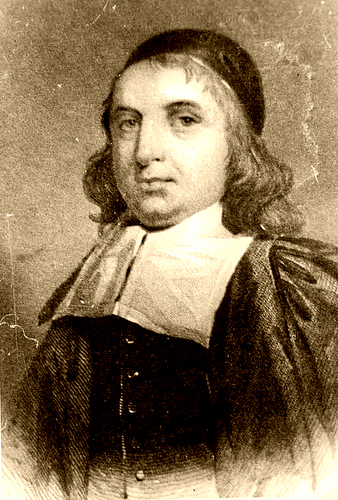
"The intent of the Redeemer's undertaking was not to purchase for his people riches, ease, and pleasures on earth; but to mortify their lusts, heal their natures, and spiritualize their affections; and thereby to fit them for the eternal fruition of God."
John Flavel
Sunday, April 8, 2012
The Old Church is the New Cool Church
A friend of mine up in Atlanta is amazing me with his efforts in revitalizing an old Baptist Church and bridging the gap between ages...all for the sake of the fame of Jesus!
Friday, April 6, 2012
The Father's Cup

Jesus is bowed and bloody, 110 pounds of lumber is strapped across his shoulders. The weight of the rough wood proves too much as it grinds against the lacerations left by the Roman scourging. Pain explodes like light in Jesus' brain. And he crumples under the beam.
When he comes to, Jesus feels somehow weightless and he realizes that the wooden crossbeam has been cut from his back. Another man is carrying it now, a dark man whose face he cannot see. But he does see the face of another.
Mercifully, a Roman centurion bends and takes Jesus under the arm to lift him gently to his feet again. Jesus looks up and holds the soldier captive in his gaze. The victim’s eyes do not pierce the centurion with the hatred he expects. Instead, he finds love in those eyes. Love mingled with pain, yes — brokenhearted love — but love nonetheless. And not a love excited by one mere act of kindness. This love preceded the moment. This love preceded his existence. This love preceded the existence of the world. Somehow the centurion knows that these are the eyes of Eternal Love.
Jesus holds the soldier’s gaze as long as he can. But the blood that dripped off the ends of his hair to the ground when he was bent low under the cross now drops into his eyes. The blood mixed with sweat stings, and Jesus blinks.
By this time Friday, Jesus is familiar with that sting. But it was a new sensation on Thursday night in the garden.
There, in the garden, he walked with his friends singing hymns and speaking quietly. They passed through the city gate and walked up the hill of Gethsemane through the olive trees. But there were only eleven friends with Jesus—not twelve. One of the twelve chosen proved no friend at all. Satan already held Judas, the betrayer, by the hand then and now he has him by the neck. Judas hangs pale and gasping swinging from the end of his belt under the limb of a tree. The flames of hell are already lapping at his feet. It would have been better if he had never been born.
Eleven remained then. But soon there would be none. Not one friend would stay. Strike the Shepherd and the sheep will scatter. One would run terrified out of the garden naked and the rest would follow.
Jesus fell on his face in prayer. He tasted the dirt as he fought for the eternal destinies of his eleven sleeping sheep a stone’s throw away.
“Let the cup pass,” he cried. “Father, if possible, let the cup pass!”
The Father gazed lovingly at his Son and the Son stared back knowingly.
“Your will be done, Father,” whispered the Son.
And the Father held out the cup and Jesus looked in. What he saw there flung him into the throes of agony. He pressed his forehead deep into the dirt, which softened into mud when mingled with his tears. Jesus felt several small explosions of pain underneath the skin on his face. His tiny capillaries in the sweat glands burst under the stress and blood flowed through his pours and dropped into his eyes. And it stung.
Jesus lifted his head to the sky and cried out, “I will drink from this cup, Father. I will drink from this cup so that your glory may be vindicated and my name may be glorified. And so that the sheep that you have given me will see our glory and enjoy it forever. I will drink on behalf of our rescue mission.”
Just then, through blurry eyes, Jesus saw the line of torches slithering like a snake up the hill to the garden. The mob arrived. Judas kissed. Friends fled. Soldiers arrested. And Jesus’ world became a swirl of torment and mockery.
His trial was a sham as liars lied and mockers mocked. God claimed to be God, and it was called blasphemy. And the face that Moses longed to see — the face that he was forbidden to see — was slapped and spit on. More blood in the eyes; more stinging.
As he was dragged from the High Priest’s house, Jesus managed a bloody-eyed glance at Peter. This friend ran from the garden, but this friend followed. And this friend had done the unthinkable three times. This friend denied the Friend of friends. This friend denied the Friend of sinners. He invoked a curse to lend credence to his denials. And now the cock crowed. And Jesus held Peter in the gaze of Eternal Love. But Peter looked away and ran. Just outside the city gate he stumbled and fell to the ground heaving sobs and considered joining Judas on his tree. But he pleaded to the Father for forgiveness instead. And the Father looked a few hours into the future to Friday afternoon, and, on behalf of what he saw there, he granted Peter the forgiveness he requested.
The Governor of Judea was up early this cold, gray, wet Friday morning. The city still slept as the priests and soldiers led Jesus to the palace of Pontius Pilate. But soon the priests would have a sympathetic crowd as news of Jesus’ arrest passed from house to house.
They leveled their charges: “This man forbids us to pay tribute to Caesar and he calls himself a king.”
Pilate stared intently at Jesus. He questioned him. And found no guilt. Neither did King Herod. So Pilate offered to release Jesus to the swelling crowd. But they chose freedom for the murderer Barabbas instead.
“Then what should I do with Jesus of Nazareth?” Pilate shouted to the mob.
The mob thundered back: “Crucify him! Crucify him!”
And their voices prevailed. Pilate washed his hands and delivered the Innocent One to death.
Next, Jesus was stripped and his hands were tied above his head to a post. A large, shirtless Roman legionnaire stepped toward Jesus fondling a short whip. Several heavy, leather thongs hung off the handle weighed down by the small balls of lead attached near the ends of each. The muscles in the legionnaire’s back and arms bulged as he brought down the heavy whip with full force again and again and again across Jesus’ shoulders and back and buttocks and legs.
The Jews would have been more merciful — no more than thirty-nine lashes. But the Romans extended no such mercy. And the balls of lead yielded large deep bruises. Then the bruises were eventually broken open by the endless blows. The thongs cut through the skin and then they cut deeper into muscles. From behind, Jesus no longer looked human. His skin hung in long, bloody ribbons of tissue.
Fearing they had gone too far and killed Jesus before it was time, the soldiers cut him loose. He fell in an unconscious heap at their feet.
As Jesus came to he was forced to stand. A purple robe, not his own, was wrapped around him and clung to his open wounds. They made him hold a stick — a mock scepter. And now the King of the Jews needed a crown. One of the Romans picked up a thorn branch from a pile of firewood and braided it into a circle. Never did thorns compose so rich a crown — or so painful a crown. Another soldier took the scepter from the hand of the King of kings and beat the crown into his skull. Bloody sweat blinded him. And his stinging eyes momentarily took his mind off the pain in his back.
But then the purple robe was torn from Jesus. And ribbons of flesh that adhered to the cloth were ripped off with its removal. Each wound had a voice of its own to shriek its pain. And Jesus collapsed again.
Now Jesus is dressed in his own clothes. And before the merciful centurion can move Jesus along behind the dark man now carrying the cross, an old woman approaches and wipes Jesus’ face with a linen cloth. Jesus looks her in the eyes and then looks to the crowd of weeping women behind her.
And he says, “Daughters of Jerusalem, do not weep for me, but weep for yourselves and for your children. The days are coming when they will say, ‘Blessed are the wombs that never bore and the breasts that never nursed.’ Then they will say to the mountains, ‘Fall on us,’ and to the hills, ‘Cover us.’”
And to the old woman he adds, “If they do these things when the wood is green, what will happen when it’s dry?”
Then Jesus walks on beyond the city gates. It’s nine o’clock in the morning, Friday.
Through the steady rain Jesus glances up from the base of a rocky hill. It’s named Golgotha — the Skull.
At the top he sees several posts fixed in the ground. Three of those poles stand ready to receive their crossbeams and the tattered body of Jesus and the two criminals carrying their crosses behind him.
At the top of the hill the merciful centurion hands Jesus a cup. Jesus sniffs the liquid. It’s wine mixed with myrrh, a mild narcotic to dull the pain. But Jesus is meant to feel all the pain. So he hands the cup back. This is not the cup of the Father.
A soldier strips Jesus. Again his back is set on fire as skin tears away with the cloth.
Jesus now lays naked in the dirt. The dark man places the crossbeam by Jesus’ head. This time Jesus sees his face. It is Simon of Cyrene. Jesus knows him by name and did before there was time.
The beam becomes his pillow now. Two men take hold of his hands. The soldier on his left yanks his arm as far as it will go. But the soldier to his right is gentler. Jesus turns to him. It’s the merciful centurion again. He picks up a cold spike and places it to Jesus’ wrist. Then he picks up a hammer. Their eyes meet. Eternal Love shines forth again, and the centurion is undone. He looks away and lifts his hammer.
In that moment Jesus hears his own word of power: the word of power that holds the merciful centurion in existence, the word of power that causes the hammer to be. He’s speaking it all into being: the soldiers, the priests, the thieves, the friends, the mothers, the brothers, the mob, the wooden beams, the spikes, the thorns, the ground beneath him, and the dark clouds gathering above. If he ceases to speak they will all cease to be. But he wills that they remain. So the soldiers live on, and the hammers come crashing down.
Jesus is lifted on his crossbeam to the post. He sags held only by the spikes in his wrists. Jesus designed the median nerves in his arms that are working perfectly now. The pain shoots up those nerves and explodes in his skull as the crossbeam is set in place.
His left foot is now pressed against his right foot. Both feet are extended, toes down, and a spike is driven through the arch of each. His knees are bent.
Jesus immediately pushes himself up to relieve the pain in his outstretched arms. He places his full weight on the spikes in his feet and they tear through the nerves between the metatarsal bones. Splinters from the post pierce his lacerated back — searing agony.
Quickly waves of cramps overtake him — deep, throbbing pain from his head to his toes. He’s no longer able to push himself up and his knees buckle.
He’s hanging now by his arms. His pectoral muscles are paralyzed and his intercostals are useless. Jesus can inhale, but he cannot exhale. His compressed heart is struggling to pump blood to his torn tissue. He fights to raise himself in order to breathe and in order to speak.
He looks down at the soldiers now gambling for his clothes. He pushes himself up through the violent pain to pray aloud, “Father, forgive them, for they don’t know what they do.”
Then he sags back into silence. But the crowd is not silent, though he can barely hear their taunts through the din of his pain.
“He saved others, let him save himself!”
“If you’re the Christ, come down off the cross!”
“Save yourself, King of the Jews!”
The criminal on the cross to his left joins the mockery. But the thief to his right repents. Jesus pushes himself up to say to him, “Truly, I say to you, today you will be with me in paradise.”
It’s noon now. The rain falls harder and the clouds blacken. Jesus looks down through wet strands of hair into the familiar face of a woman. A new pain grips him — greater pain than all the whips and spikes in the Kingdom of Rome. It’s his mother. She’s sobbing so hard that her breathing is as labored as his. Without words she looks into his eyes and begs to know why. He longs to hold her and to tell her that it’s all for her. He pushes upward and says, “Woman.” Then he looks his friend John in the eyes. John is standing behind her supporting his own weeping mother. “He is now your son.”
Then to John Jesus murmurs, “And she is now your mother. Take her away from here.”
And he sags back into silence, back into countless hours of limitless pain.
Then Jesus is startled by a foul odor. It isn’t the stench of open wounds. It’s something else. And it crawls inside him. He looks up to his Father. His Father looks back, but Jesus doesn’t recognize these eyes. They pierce the invisible world with fire and darken the visible sky. And Jesus feels dirty. He hangs between earth and heaven filthy with human discharge on the outside and, now, filthy with human wickedness on the inside.
The Father speaks:
Son of Man! Why have you sinned against me and heaped scorn on my great glory?
You are self-sufficient and self-righteous — consumed with yourself and puffed up and selfishly ambitious.
You rob me of my glory and worship what’s inside of you instead of looking out to the One who created you.
You are a greedy, lazy, gluttonous slanderer and gossip.
You are a lying, conceited, ungrateful, cruel adulterer.
You practice sexual immorality; you make pornography, and fill you mind with vulgarity.
You exchange my truth for a lie and worship the creature instead of the Creator. And so you are given up to your homosexual passions, dressing immodestly, and lusting after what is forbidden.
With all your heart you love perverse pleasure.
You hate your brother and murder him with the bullets of anger fired from your own heart.
You kill babies for your convenience.
You oppress the poor and deal slaves and ignore the needy.
You persecute my people.
You love money and prestige and honor.
You put on a cloak of outward piety, but inside you are filled with dead men’s bones — you hypocrite!
You are lukewarm and easily enticed by the world.
You covet and can’t have so you murder.
You are filled with envy and rage and bitterness and unforgiveness.
You blame others for your sin and are too proud to even call it sin.
You are never slow to speak.
And you have a razor tongue that lashes and cuts with its criticism and sinful judgment.
Your words do not impart grace. Instead your mouth is a fountain of condemnation and guilt and obscene talk.
You are a false prophet leading people astray.
You mock your parents.
You have no self-control.
You are a betrayer who stirs up division and factions.
You’re a drunkard and a thief.
You’re an anxious coward.
You do not trust me.
You blaspheme against me.
You are an un-submissive wife.
And you are a lazy, disengaged husband.
You file for divorce and crush the parable of my love for the church.
You’re a pimp and a drug dealer.
You practice divination and worship demons.
The list of your sins goes on and on and on and on. And I hate these things inside of you. I’m filled with disgust, and indignation for your sin consumes me.
Now, drink my cup!
And Jesus does. He drinks for hours. He downs every drop of the scalding liquid of God’s own hatred of sin mingled with his white-hot wrath against that sin. This is the Father’s cup: omnipotent hatred and anger for the sins of every generation past, present, and future — omnipotent wrath directed at one naked man hanging on a cross.
The Father can no longer look at his beloved Son, his heart’s treasure, the mirror-image of himself. He looks away.
Jesus pushes himself upward and howls to heaven, “My God, my God, why have you forsaken me?”
Silence.
Separation.
Jesus whispers, “I’m thirsty,” and he sags.
The merciful centurion soaks a sponge in sour wine and lifts it on a reed to Jesus’ lips. And the sour wine is the sweetest drink he ever tasted.
Jesus pushes himself up again and cries, “It is finished.” And it is. Every sin of every child of God has been laid on Jesus and he drank the cup of God’s wrath dry.
It’s three o’clock, Friday afternoon, and Jesus finds one more surge of strength. He presses his torn feet against the spikes, straightens his legs, and with one last gasp of air cries out, “Father, into your hands I commit my spirit!”
And he dies.
The merciful centurion sees Jesus’ body fall far forward and his head drop low. He thrusts a spear up behind Jesus’ ribs—one more piercing for our transgression—and water and blood flow out of his broken heart.
In that moment mountains shake and rocks spilt; veils tear and tombs open.
And the merciful centurion looks up at the lifeless body of Jesus and is filled with awe. He drops to his knees and declares, “Truly this man was the Son of God!”
Mission accomplished. Sacrifice accepted
Subscribe to:
Posts (Atom)